Our Indigenous Services Plan, co-developed through engagement with Indigenous leaders, groups and individuals across Ontario, aims to increase awareness of our services and ensure they are accessible, relevant and meaningful to Indigenous Peoples.
We are committed to building strong relationships with Indigenous communities and organizations, integrating reconciliation into our work and making our processes more culturally informed, responsive and accessible.
This plan is intended to be a living document that will reflect our ongoing consultation, engagement and progress on its commitment.
Reconciliation is not an abstract concept – it is a responsibility that must shape how public institutions listen, act and serve. As Ontario’s Ombudsman, I believe deeply that advancing reconciliation is a shared obligation for all public bodies in Canada and an essential part of my mandate.
My understanding of this responsibility has been shaped by more than the complaints that come to our Office. It has also been shaped by what I have seen firsthand. Visiting communities such as Asubpeeschoseewagong Netum Anishinabek (Grassy Narrows First Nation) and Neskantaga First Nation, and speaking directly with Indigenous leaders and community members from across Ontario, has reinforced for me how profoundly government and public administrative decisions affect Indigenous Peoples. Those experiences have strengthened my resolve to ensure that independent oversight contributes meaningfully to fairness, accountability and positive change.
The Ombudsman’s role is unique. We are not part of government and do not deliver programs or make policy; we stand up for what is fair, legal and right. Our independence allows us to listen without preconceptions, to examine how public systems operate in practice, and to recommend improvements where they fall short. It also positions us to help Indigenous people navigate public services and to bring attention to systemic issues that require reform. These experiences underscore the importance of culturally safe oversight and of ensuring that Ombudsman Ontario is accessible, respectful and responsive to Indigenous concerns.
This Indigenous Services Plan marks an important step forward. It reflects our firm commitment to strengthen relationships with Indigenous communities, deepen internal knowledge, and ensure our processes respect Indigenous rights and perspectives while recognizing the importance of Indigenous sovereignty and self-determination. As Indigenous governments continue to shape new models of governance, our Office must engage in a spirit of partnership and humility, supporting fairness and accountability in ways that respect Indigenous authority.
Reconciliation is a continuing journey of listening, learning and acting with purpose. This Plan reflects where Ombudsman Ontario is today – and our commitment to doing better tomorrow. I am proud of the progress we have made and determined that our Office will continue to help advance respect, fairness and better public services for Indigenous Peoples across Ontario.
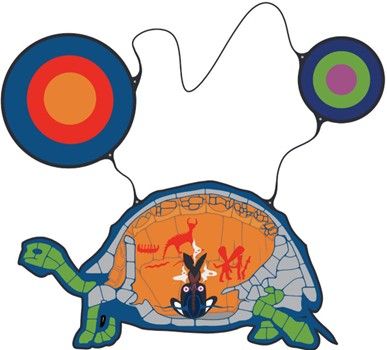
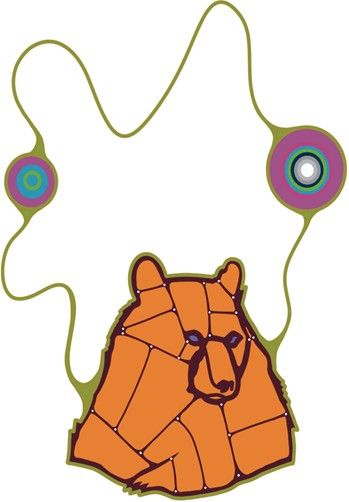
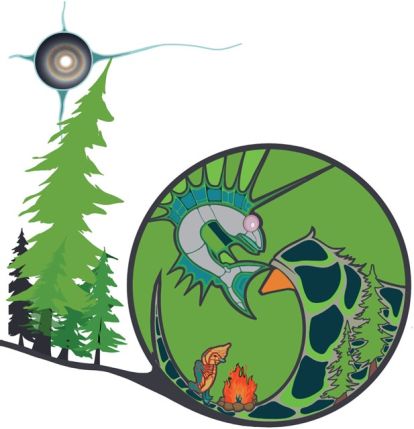
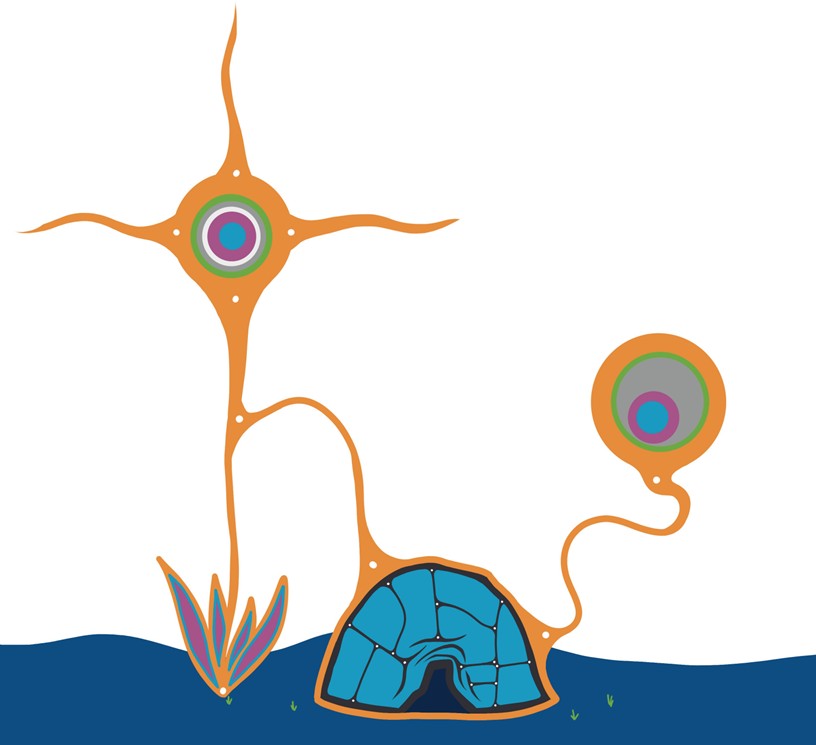
Greetings all of my relatives, Here are my own words on the Overall theme and meaning behind my designs.
Name of project: "All our relations"
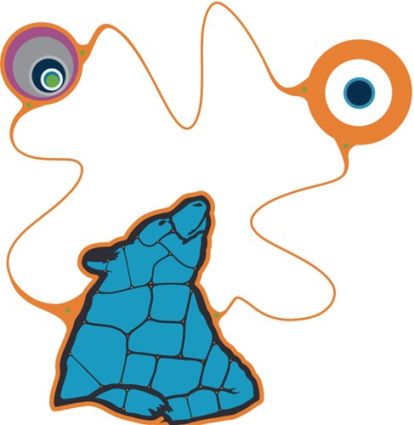
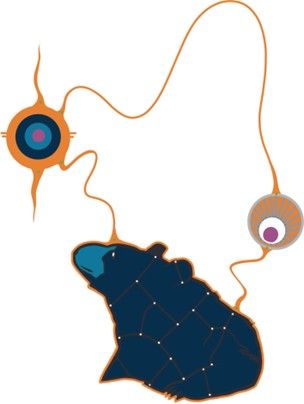
Each design of the Bear (Mukwa Dodem) represents one of the four directions (east, south, west and north). When all four designs are together in one image, they represent the many layers of the Anishinaabe Medicine wheel. These layers are filled with infinite possibilities of teachings.
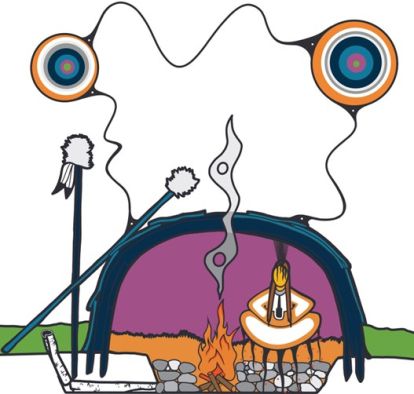
The Landscape design is a Visual Land Acknowledgement. The design was influenced by the Six Nations peace treaty story that is a part of the Anishinaabe Creation story.
There are three lodges to symbolize the importance of building strong internal and external foundations with Allies. The responsibility to do the research to understand Anishinaabe cultural protocols and standards. All designs are focused on commitments to building strong communities focused on Anishinaabe values and seven-generation thinking.
The Miangun design is called : "How the wolves change the rivers"
It is inspired by the influence that the wolf pack has on Mother Earth. The wolf clan calls for leadership and collective contributions for the balance and harmony needed for life to flourish in abundance.
All designs are layered on sacred geometry patterns that are layered in Anishinaabe teachings of the laws of nature and so much more.
October 29, 2025: Ombudsman Paul Dubé (fifth from right) and members of his executive team at an event in honour of Ombudsman Ontario’s 50th anniversary, which was opened by Grandmother Kim Wheatley (centre). The event was hosted by Lieutenant Governor Edith Dumont at her premises.
Ontario’s Parliamentary Ombudsman is an independent, non-partisan Officer of the Ontario Legislature who promotes fairness, accountability, transparency and respect for rights in provincial and municipal public services. Through complaint resolution, investigations, referrals, systemic reviews and commentary on legislation, the Ombudsman addresses individual and systemic administrative issues across a wide range of public sector bodies.
Ombudsman Ontario recognizes that Indigenous peoples in Ontario continue to experience systemic racism and inequities rooted in colonialism, resulting in disproportionate impacts across justice, child welfare, education, housing, health care and social services.
Indigenous Peoples are also over-represented among marginalized populations served by the Ombudsman’s Office. Every day, we hear from people who feel they have been treated unfairly by public services. We know that Indigenous individuals, families and communities often face unique and persistent barriers when dealing with government systems. Too often, those systems have not been designed with Indigenous realities, rights or histories in mind. The result can be frustration, exclusion and inequity.
This Indigenous Services Plan (ISP) reflects the Ombudsman’s ongoing reconciliation journey, grounded in listening, learning and collaboration with First Nations, Inuit and Métis communities. It is guided by the United Nations Declaration on the Rights of Indigenous Peoples (UNDRIP), the Truth and Reconciliation Commission’s (TRC) Calls to Action, and the Calls for Justice of the National Inquiry into Missing and Murdered Indigenous Women and Girls (MMIWG). Answering the Calls to Action for reconciliation is integral to the Ombudsman’s mandate to uphold rights and promote equitable public services for Indigenous individuals.
The ISP was developed through an Indigenous-led engagement process with more than 100 Indigenous participants across Ontario, including leaders, service providers, organizations, youth and community members, who shared their perspectives through individual conversations, group discussions and community sessions. Engagement emphasized cultural protocols, transparency, and validation of participant input.
The Indigenous Services Plan is guided by five core commitments:
Prioritize continuous learning and the expansion of Indigenous cultural competencies across Ombudsman Ontario.
Build reciprocal relationships with First Nations, Inuit and Métis individuals, governments, communities and organizations.
Enhance service accessibility and experience for Indigenous Peoples.
Contribute our voice and expertise to addressing systemic issues in support of reconciliation.
Measure impact and report on progress in implementing the Indigenous Services Plan.
The ISP affirms Ombudsman Ontario’s responsibility to support reconciliation by advancing equitable, accountable and rights-based public services. The Ombudsman commits to being a trusted ally to Indigenous Peoples and to contributing to meaningful, lasting improvements in public service delivery across Ontario.
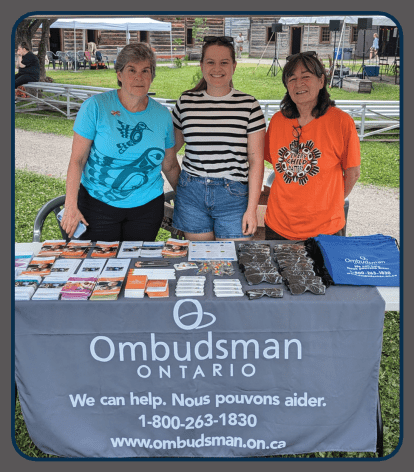
June 18, 2025: Booth at Chiefs of Ontario Annual Assembly, Hiawatha First Nation.
As an independent, non-partisan Officer of the Ontario Legislature, the Ombudsman is not part of the government. The Ombudsman is a democratic institution of Ontario’s Provincial Parliament – the Legislative Assembly – and is appointed by all parties. The Ombudsman’s role is to ensure that the provincial government and public sector serve people in a way that is fair, accountable, transparent and respectful of their rights. The Ombudsman recommends solutions to individual and systemic administrative problems.
Ombudsman Ontario services include providing information and referrals, assistance with navigating bureaucracy, complaint resolution, analysis of legal frameworks, submissions to government, identification of best practices to ensure fair treatment, investigations, and recommendations for improved public services.
Some of the issues and organizations the Ombudsman can assist with include:
ServiceOntario (driver’s licences, health cards, birth certificates)
Municipal services, programs and permits
Correctional facilities and youth justice centres
Environmental and natural resources concerns
Children’s aid societies, group and foster homes for children and youth
School boards, colleges, universities and student assistance programs
Ontario Disability Support Program, Ontario Works and other social benefits
The development of the Indigenous Services Plan represents the Ombudsman’s ongoing commitment to reconciliation, grounded in listening, learning and partnership. It reflects the Ombudsman’s responsibility to uphold Indigenous rights and support more equitable public services for present and future generations. We acknowledge that we have much work to do to progress our reconciliation commitments.
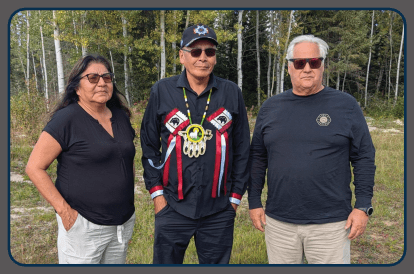
September 16, 2025: Ombudsman Dubé with Neskantaga Chief Gary Quisess, centre, and Anna Betty Achneepineskum, Nishnawbe Aski Nation Deputy Grand Chief, left, Neskantaga First Nation.
In addition to developing the ISP, Ombudsman Ontario has been undertaking the following actions:
Providing cultural safety training for all staff, as well as the opportunity to learn about medicines from a traditional Knowledge Keeper;
Mandatory annual staff learning, including through the National Centre for Truth and Reconciliation and from the Special Interlocutor for Missing Children and Unmarked Graves;
Meeting with Indigenous leadership and organizations, and visiting First Nation communities to hear their concerns and to better understand lived experiences;
Participating in events across Ontario to listen to and speak with Indigenous community members, including attending Pow Wows, Elder gatherings, and conferences of the Chiefs of Ontario and the Ontario Native Women’s Association;
Continually assessing our practices to better meet the needs of Indigenous communities;
Supporting our staff in handling complaints from Indigenous individuals, including asking complainants, witnesses and agencies what a culturally safe approach looks like to them;
Adopting a “no wrong door” approach where staff will actively help individuals find appropriate and relevant assistance, if we are unable to provide this within the Ombudsman’s mandate;
Supporting the Indigenous Circle, a team of Ombudsman Ontario Indigenous staff as part of our Children and Youth Unit;
Developing brochures about Ombudsman Ontario’s services in Indigenous languages, including Ililîmowin, Anishinaabemowin, Kanien’kéha, and Anishininiimowin;
Establishing a relationship between the Ombudsman’s Children and Youth Unit and the Association of Native Child and Family Services Agencies of Ontario (ANCFSAO), participating in ANCFSAO conferences and committing to co-developing rights brochures for Indigenous children and youth in consultation with ANCFSAO and the Chiefs of Ontario (COO);
Incorporating relevant findings and Calls to Action from the Truth and Reconciliation Commission and Calls for Justice from the National Inquiry into Missing and Murdered Indigenous Women and Girls into our work; and
Offering cultural wellness supports to Indigenous witnesses and families during investigations.
Ombudsman Ontario collaborated with Tawi:ne Consulting Inc., an award-winning First Nation woman-owned and operated firm specializing in Indigenous engagement and consultation. The objectives of the engagement process were to:
Raise awareness about the Ontario Ombudsman and illustrate its capacity to promote fairness and protect rights at provincial and municipal levels;
Co-develop the definitions of key guiding principles and concepts that would guide Ombudsman Ontario’s Indigenous Services Plan;
Gather feedback about Ombudsman Ontario’s messaging, outreach and service delivery;
Learn how Indigenous communities and organizations would like to collaborate with Ombudsman Ontario, and how the organization can effectively serve Indigenous Peoples;
Develop culturally informed processes for Ombudsman Ontario related to service delivery for Indigenous Peoples, as well as relationship-building, engagement and collaboration with Indigenous communities and organizations.
We are grateful to the more than 100 Indigenous participants across Ontario who provided feedback and thoughts through the engagement process.
Some engagements started with formal outreach and Ombudsman meetings with Indigenous leadership, including the Ontario Regional Chief, the Chiefs of Ontario Leadership Council, the Grand Chief of the Association of Iroquois and Allied Indians (AIAI), the Deputy Grand Chief of Nishnawbe Aski Nation (NAN), the Ontario Federation of Indigenous Friendship Centres (OFIFC) and the Ontario Native Women’s Association. These meetings introduced the Ombudsman’s Office and the Indigenous Services Plan development process and provided an opportunity for leaders to share their priorities and challenges impacting their communities. Outreach was also conducted to the Métis Nation of Ontario and Inuit leadership and service organizations.
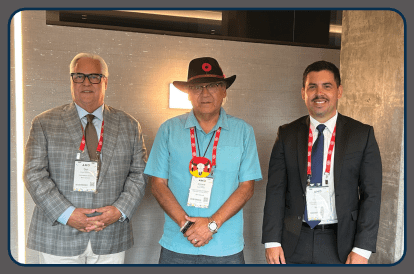
August 20, 2025: Ombudsman Paul Dubé (left) with Armand Jourdain Sr., and Sean Longboat of the Ontario Federation of Indigenous Friendship Centres, in Ottawa.
In addition, we held virtual individual conversations, thematic group discussions, and open community discussions with a wide range of participants, representing:
First Nation communities
Staff in child and family services and justice services
Staff members of Tribal Councils and Political Territorial Organizations
Chiefs of Ontario policy staff
Ontario Federation of Indigenous Friendship Centres staff
Leadership and staff of various individual Friendship Centres
Métis Nation of Ontario staff
Members of Indigenous women’s associations
Organizations providing services to First Nations, Inuit and Métis people in areas of housing, justice, mental health and counseling, legal services
Indigenous municipal advisors
Indigenous student services staff from Ontario universities and colleges
Indigenous community members
All engagement sessions were opened and closed by Knowledge Keepers. Summaries of the sessions were shared with participants (protecting their anonymity) to confirm their input was accurately reflected.
Our work on the ISP begins by acknowledging the history and the ongoing legacy of colonization. As stated in the TRC Final Report, Canada pursued a state policy aimed at eliminating Indigenous people as “distinct legal, social, cultural, religious, and racial entities in Canada.” Through this policy, Indigenous Peoples have been subjected to dispossession and displacement, injustices and systemic racism, intergenerational trauma, socio-economic marginalization, and disconnection from culture.
These realities persist throughout government systems and services, and continue to contribute to socio-economic inequalities affecting Indigenous communities and urban Indigenous peoples. The effects are clearly reflected in the disproportionate number of Indigenous individuals who come into contact with the Ombudsman’s Office from the corrections and child welfare sectors.
Discussions with Indigenous leaders, community members and service providers underscored that administrative barriers and poor service experiences encountered by Indigenous Peoples are not isolated or technical issues. These failures are embedded within systems created through historical and ongoing colonial processes. They reflect structural inequities such as jurisdictional gaps, inconsistent service standards, digital access barriers, and discretionary decision-making. Government services and administrative systems often operate in ways that reinforce anti-Indigenous racism, poverty and exclusion.
Colonial legacies within the child welfare system continue to disconnect Indigenous children and youth from family, culture, language and community. Many Indigenous students in the North are routinely forced to leave their families and communities to access secondary education. Indigenous students also often face discrimination and inadequate access to mental health and culture-based supports. Indigenous people are disproportionately over-policed, over-incarcerated, met with punitive approaches, and lack access to reintegration services. Within social services, discriminatory and inconsistent decision-making and punitive clawbacks undermine stability for Indigenous individuals and families. All of these barriers perpetuate intergenerational trauma and cycles of involvement with child welfare and justice systems.
Furthermore, we heard that complex, fragmented and bureaucratic service systems are difficult to understand and access. Confusing and uncoordinated processes frequently cause delay or deny access to essential services and result in people “falling through the cracks.” These navigation barriers disproportionately affect youth and others without family or community support.
Receiving culturally appropriate safe services is an Inherent Right of Indigenous Peoples as outlined in UNDRIP, TRC Calls to Action and MMIWG Calls for Justice. We heard that these rights are not consistently upheld or respected. There is a lack of culturally appropriate government services that meet the needs of Indigenous Peoples. Many government services fail to reflect the unique cultures, languages and realities of First Nations, Inuit and Métis. For example, within child welfare and correctional facilities systems, access to rights-based and culturally safe services is obstructed by underfunding, staff shortages, and administrative barriers. Indigenous service providers, such as Friendship Centres, play a critical role in providing culturally grounded and community-based services that uphold distinct Indigenous rights and fill systemic gaps. However, these organizations are overstretched and marginalized within the service ecosystem due to chronic underfunding and lack of collaboration by government institutions.
Indigenous Peoples face significant accountability barriers within government and public sector services, as complaint processes are unclear, slow or discretionary. Individuals are left with little or no effective recourse when their rights are not respected, resulting in many simply giving up and disengaging after repeated inaction and failure to have their complaints addressed.
Overall, administrative systems and processes often function as tools that sustain colonial power, normalize discrimination, and shift blame onto Indigenous individuals and communities. Addressing barriers and challenges within public and government services requires systemic transformation. Administrative fairness must centre Indigenous rights, awareness of lived realities, and self-determination.
August 17, 2024: Anishinaabe Keeshigun Pow wow, Fort William First Nation.
The Ontario Ombudsman promotes fairness, accountability, transparency and respect for rights in the public sector. In developing the ISP, we were mindful of these principles, the input we received from Indigenous Peoples and the reconciliation commitments outlined in UNDRIP, the TRC Calls to Action and the MMIWG Calls for Justice.
Firstly, this means respecting and protecting Indigenous rights, including the enjoyment of full human rights, and the right to:
Be free from discrimination
Self-determination
Be recognized as distinct Peoples
Practice their cultures and receive culturally appropriate services
Participate in decision-making on issues that impact rights
Redress
We recognize that these rights are held both individually and collectively.
Through our engagement sessions to date, we heard that fairness in public services should include recognizing that Indigenous Peoples have not historically had equal opportunities due to systemic disadvantages. Achieving fairness requires equity-based approaches that centre their needs and lived realities and reduce bureaucratic and colonial barriers to access. Ultimately, fairness should be measured by whether public services create meaningful positive change in the lives of Indigenous Peoples. Fairness also means that all voices are valued equally, and that decision-making spaces are accessible and inclusive.
To be transparent and accountable, public services must ensure complaints are heard and handled safely, while openly acknowledging harm, mistakes and service failures. This includes taking concerns seriously, recommending meaningful redress, and ensuring that consequences and corrective actions are clearly defined and followed through.
Reconciliation in public services must ensure internal reflection on power and responsibility. It should be grounded in honesty and a willingness to listen and take genuine action to repair harm. We will continue working collaboratively to ensure these principles are meaningfully included and reflected in our administration and within our oversight of public institutions and services.
Through our engagement in developing the ISP, we identified several opportunity areas to strengthen our organizational impact, in daily interactions as we resolve complaints and in our role as an agent of change in addressing systemic issues. These opportunities frame our commitments, outlined in the next section.
Improving Awareness and Building Relationships
Improving awareness of the Ombudsman’s services is a critical opportunity to increase Indigenous Peoples’ access to accountability and support individuals who wish to raise concerns or challenge unfair treatment.
Many engagement participants, including community members, frontline workers and Indigenous service providers, were unfamiliar with the Ombudsman’s role, jurisdiction and complaint processes. Participants also identified the need to increase Indigenous individuals’ awareness of their rights to fair, accountable, transparent and rights-based public services, and their right to seek redress when these services are not provided in this manner. They highlighted how deep mistrust of government systems, caused by historical and ongoing colonial harm, makes it difficult for some individuals to seek help from these systems.
Building relationships with the Indigenous community is fundamental to increasing awareness and improving trust in the Ontario Ombudsman’s Office and services. This should focus on in-person connection and interaction with all Indigenous Peoples – leaders, governments, communities, organizations, and community members, including elders and youth. Participants in our engagement sessions saw an opportunity for the Ombudsman’s Office to act as an ally in helping to promote a culture of accountability within public services and advocate for Indigenous rights. Achieving this requires a sustained commitment, ongoing and open communication, feedback, and openness to change.
Service Delivery Improvements
With regard to Ombudsman Ontario’s service delivery, we heard about opportunities to improve cultural safety, communication, follow-up and access in order to better support Indigenous Peoples.
We heard that culturally safe and trauma-informed service delivery is important to enable equitable access to accountability mechanisms. Trauma-informed and culturally safe services help to build trust and reduce anxiety and intimidation during interactions with perceived colonial and bureaucratic organizations. Accessing oversight or complaint processes may require the reliving of painful experiences. Adopting a trauma-informed lens involves staff responding with empathy, active listening and respect. This approach promotes choice and connection. It helps individuals build confidence and agency. It also provides tools and information to help individuals increase their capacity for informed decision-making and system navigation. Grounding service delivery in this approach reduces the risk of re-traumatization and fosters experiences where Indigenous people feel respected, believed and dignified when accessing services.
Cultural safety includes staff awareness of Indigenous histories, lived realities and the impacts of intergenerational trauma. This helps to prevent harmful interactions and reliance on repeated explanations of trauma and history. It includes moving away from pan-Indigenous approaches and toward service delivery that recognizes distinct Indigenous experiences, cultures and community contexts. This can be advanced by integrating Indigenous culturally grounded practices as part of service delivery. For example, offering options such as Indigenous-specific intake supports, self-identification, Indigenous language access, cultural supports and collaboration on shaping processes and protocols.
Follow-up was also highlighted as a critical step in service delivery. Follow-up is a defining part of the complaint resolution process because it is the point at which accountability is realized. Participants emphasized the importance of seeing their complaints lead to concrete, enforceable changes in policies, practices and service delivery. They saw opportunities in strengthening communication about complaint outcomes and the monitoring of actions taken by government service providers based on the Ombudsman’s reports and recommendations. Effective follow-up helps to build confidence that institutions are being held accountable and honours the time and personal efforts Indigenous individuals share when engaging with the Ombudsman’s Office.
Furthermore, engagement participants highlighted that individuals’ interactions with the Ombudsman’s Office should leave them feeling respected, supported and informed about their next steps, even in situations when the Office cannot provide them with direct assistance. This helps to maintain dignity and reduce harm during times of crisis for people who are accessing services.
Ombudsman Ontario has adopted a “no wrong door” approach to complaints. If the matter is outside our scope and we cannot deal with it ourselves, we will provide assistance and information on the correct organization to contact. We will promote and build awareness of this approach as we continue working on expanding our knowledge of resources available or relevant to Indigenous Peoples across the province to enable our staff to provide meaningful referrals.
Finally, participants in our engagement sessions also identified broader opportunities for Ombudsman Ontario to improve accessibility, including the use of plain language, developing additional complaint access methods, and improving turnaround times.
Addressing Systemic Issues
Ombudsman Ontario can play a significant role in addressing systemic issues. We make “proactive ombudsmanship” a priority, with the aim of strengthening and improving public services. Currently, this includes making recommendations and promoting best practices to remove systemic barriers and improve service delivery and outcomes for Indigenous Peoples in the areas of our jurisdiction. Through engagement with Indigenous participants, we heard about opportunities to integrate additional actions that support reconciliation.
Participants highlighted the opportunity to strengthen the Ombudsman’s ability to identify, monitor and address emerging and systemic issues affecting Indigenous Peoples. This can be achieved by establishing an Indigenous advisory mechanism and/or regular, structured engagement with Indigenous governments, organizations and service providers. This would support shared understanding of common challenges, reduce feelings of isolation among service providers, and enable earlier, community-informed identification of systemic concerns.
We were also urged to consider how Ombudsman Ontario can serve Indigenous governments and organizations. This can include sharing expertise on establishing effective complaint resolution processes and playing a supportive role in strengthening relationships with public institutions by facilitating dialogue and helping address barriers that affect service delivery.
Another opportunity highlighted was sharing accessible information and reporting on trends related to issues affecting Indigenous Peoples. This should be done in a distinctions-based manner and in alignment with the First Nations principles of ownership, control, access, and possession (OCAP®). Participants emphasized that by sharing high-level data, patterns and insights on complaints and outcomes, Ombudsman Ontario could help raise awareness of recurring challenges, support accountability across public systems, and enable Indigenous communities, organizations and partners to better understand and respond to issues.
Finally, we heard that Ombudsman Ontario could help identify ongoing gaps in accountability mechanisms related to services, particularly where existing oversight pathways are unclear or limited. Discussions highlighted opportunities where we could potentially leverage strengthened relationships, information sharing and system-level insights. Participants told us this could help amplify Indigenous-identified concerns about accountability gaps, support dialogue across jurisdictions, and contribute to broader efforts to uphold rights and improve accountability in public service delivery.
We are committed to an ongoing learning journey and to continuously strengthening our capacity to serve Indigenous Peoples in a culturally safe, respectful, and effective manner. This commitment includes:
Building sustained Indigenous cultural competencies across our organization to ensure staff are equipped to engage respectfully and effectively with Indigenous individuals, communities and organizations.
Providing mandatory training and education in collaboration with Indigenous communities, Knowledge Keepers, Elders and Indigenous service providers.
Seeking and incorporating guidance and support of Knowledge Keepers and Elders to inform our work and decision-making.
Fostering an inclusive organizational culture that reflects Indigenous perspectives, strengthens internal capacity, and supports the effective implementation of the Indigenous Services Plan. This would include increasing support for the internal Indigenous Circle.
Integrating culturally informed, community-guided practices into our complaint handling and investigations.
We are committed to a proactive, respectful and relationship-based approach to outreach and engagement, with a focus on:
Increasing awareness of the Ombudsman’s role, services and jurisdiction, and how we can assist Indigenous individuals and communities.
Seeking opportunities to engage with Indigenous leaders and governments.
Increasing outreach to Indigenous youth and children to improve their awareness of their rights.
Ensuring that our services are informed by – and are responsive to – the diverse needs and realities of Indigenous Peoples in urban and rural communities.
We are committed to continuously improving the accessibility, quality and overall experience of our services for Indigenous Peoples, as part of our responsibility to advance reconciliation through our work. This commitment includes:
Developing an Indigenous-specific communications plan to clearly explain our processes and promote a “no wrong door” approach that is grounded in respect and cultural safety.
Improving the accessibility of our services by continually strengthening flexible, client-centred and trauma-informed service delivery, including by creating new internal roles.
Supporting consistent follow-up and clear communication throughout our complaint processes.
Central to this work is building and sustaining trust through active listening, transparency, and consistent, respectful engagement. We recognize that trust must be earned, and we are committed to being accountable to Indigenous individuals, families and communities by ensuring our services are accessible, responsive and supportive of their rights.
Consistent with the Ombudsman’s mandate as an independent Officer of the Legislature, we will use our voice and expertise to help advance reconciliation by promoting fair, accountable, transparent and rights-respecting public services for Indigenous Peoples. We will advance this commitment by:
Strengthening our internal processes to proactively identify systemic issues affecting Indigenous Peoples through engagement with Indigenous partners, which may include the creation of an Advisory Council.
Improving our collection and analysis of issue-based information, identifying and sharing emerging trends.
Communicating our findings to government through submissions, systemic reviews and investigations, with a focus on practical improvements to public services and respect for Indigenous rights.
We are committed to strengthening accountability, transparency and organizational learning in the implementation of the Indigenous Services Plan. This commitment will include:
Developing an implementation plan for the identified commitments.
Measuring progress and impact to identify gaps and lessons learned, and to inform future planning and continuous improvement.
Engaging with Indigenous communities and partners in evaluating our progress.
Reporting publicly on progress every 3-4 years.
Continuing engagement and reviewing the plan as a living document with the intention of continuing to improve how we can best serve Indigenous individuals and communities.